Avalanche Technology’s Space Grade Ava-MRAM™: Securely Committing Mission Critical Data

Avalanche Technology’s Space Grade Ava-MRAM is capable of deterministic data commits. Traditional STT-MRAM stores its information within a Perpendicular Magnetic Tunnel Junction (pMTJ) whose underlying physics grants non-volatile writes. Ava-MRAM is engineered for byte-level write granularity and carries no complicated overhead to manage, enabling instant writes. For space missions of any type, ensuring your data […]

Avalanche Technology’s Space Grade Ava-MRAM: Endurance Beyond Reason

Avalanche Technology’s Space Grade Ava-MRAM is engineered for exceptional write (program/erase) endurance. Traditional STT-MRAM stores its information within a Perpendicular Magnetic Tunnel Junction (pMTJ) whose underlying physics grant memory high cell endurance. Avalanche Ava-MRAM is built using a proprietary formulation for its pMTJ which offers unlimited write endurance. While many technologies claim to be “Space […]

Avalanche Technology’s Space Grade Ava-MRAM: Extending Data Retention Beyond Mission Lifespan

Avalanche Technology’s Space Grade Ava-MRAM is built with industry leading data retention in mind. Ava-MRAM stores its information within a Perpendicular Magnetic Tunnel Junction (pMTJ) whose underlying physics grant its extraordinary data retention time. For space missions of any type, ensuring your data stays intact should not be constrained by the memory hardware. While many […]

Avalanche Technology’s Space Grade Ava-MRAM: Survivability in Radiation Environments

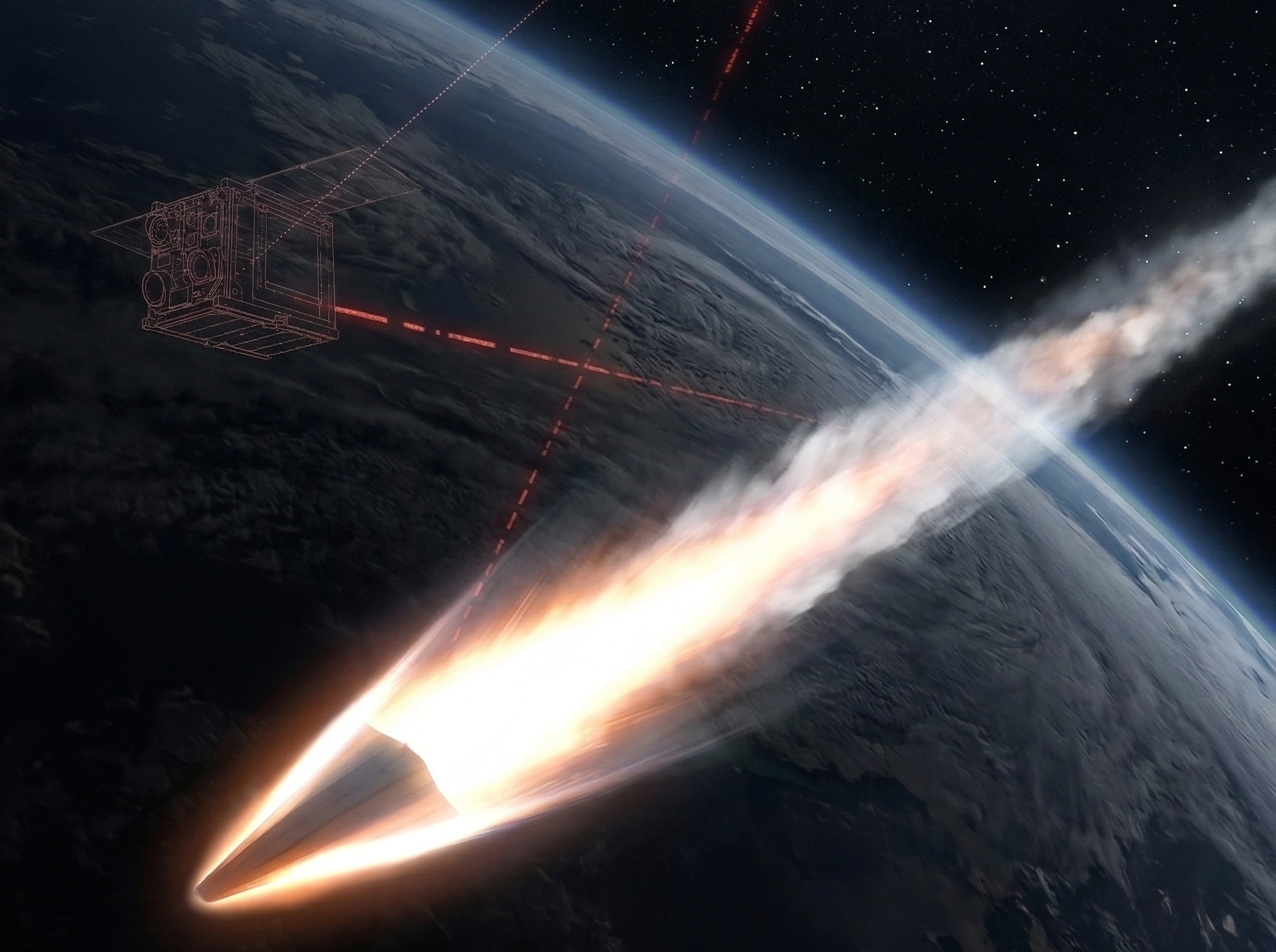
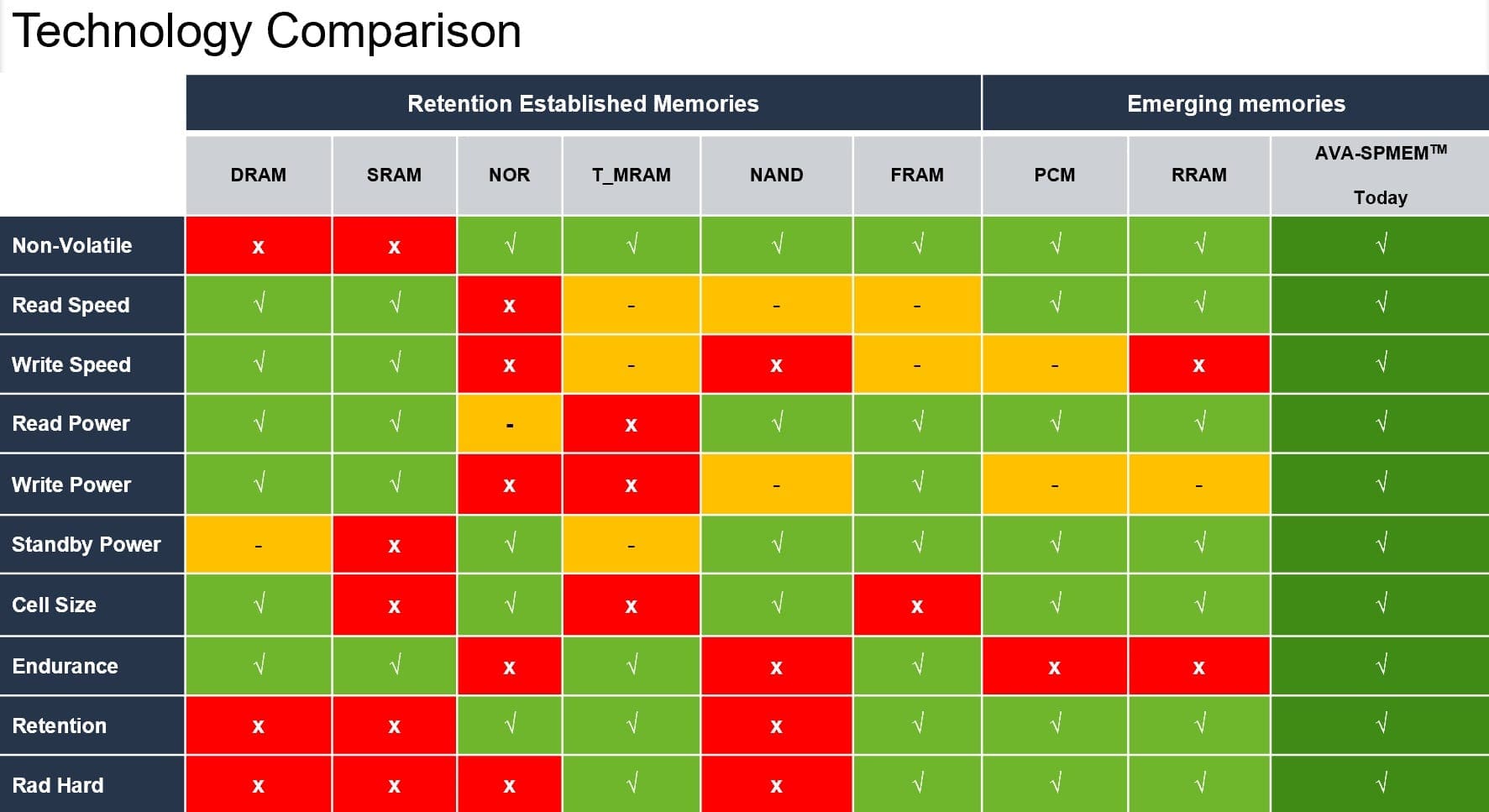
Avalanche Technology’s Space Grade Ava-MRAM is engineered for reliability in the harsh environment of space. This is achieved through the integration of two aspects. First, Ava-MRAM’s underlying physics makes its memory cells immune to radiation. Second, Ava-MRAM integrates radiation immune circuitry into the memory die. This combination produces a superior product that abstracts away the […]

[Satnews] The Pentagon’s SmallSats Have An Amnesia Problem

By Danny Sabour, VP of Sales and Marketing at Avalanche Technology Inc. The aerospace and defense industry has universally accepted that the future of orbital superiority lies in proliferated, software-defined constellations. The mandate from the Space Development Agency (SDA), with support from the Defense Innovation Unit (DIU), is clear: move away from vulnerable, exquisite “battlestars” […]

[Forbes] Infineon And Avalanche Enable Extraterrestrial Storage

Satellites are evolving from communications relays into autonomous computing platforms in orbit: processing data, running AI workloads, and making decisions at the edge. They need memory that can survive radiation, retain data for years, and restart instantly after power interruptions. This week’s Forbes article by Thomas Coughlin highlights how we and Infineon Technologies are enabling new storage architectures […]

Vertical Integration In Next-Generation Memory

Executive Summary Avalanche Technology has pioneered the development of Spin-Transfer Torque Magnetic RAM (STT-MRAM), positioning it as one of the most promising next-generation memory technologies available today.  Avalanche began as a component supplier, focused primarily on providing memory chips. Over time, however, Avalanche recognized that the traditional, fragmented memory ecosystem limited both performance and customer […]

SMC/IT 2025 Presentation and Key Takeaways

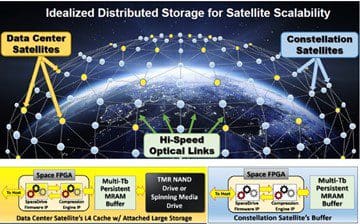
Key Takeaways: Satellite resilience & network scalability in LEO, MEO and GEO orbits will in part depend on situational awareness, driven by improved distributed processing and storage. Initiatives such as Interoperable Autonomous Systems, standardizing comms between disparate satellite networks increasingly mimicking the buildout of the terrestrial internet. Advanced computing strategies will depend upon key ingredients […]

Avalanche MAPLD 2025

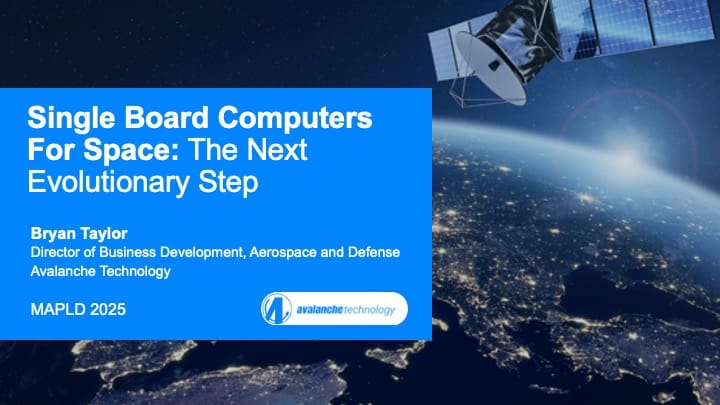
At the MAPLD 2025 Conference, Avalanche defined ​the next generation ​of computing in Space​. View details of Avalanche’s vision, as presented by Bryan Taylor, Director of Business Development, Aerospace and Defense. View the Presentation Here: Avalanche MAPLD 2025

Platforms Enabled by Hi-Rel MRAM – RHET 2024 Presentation Now Available

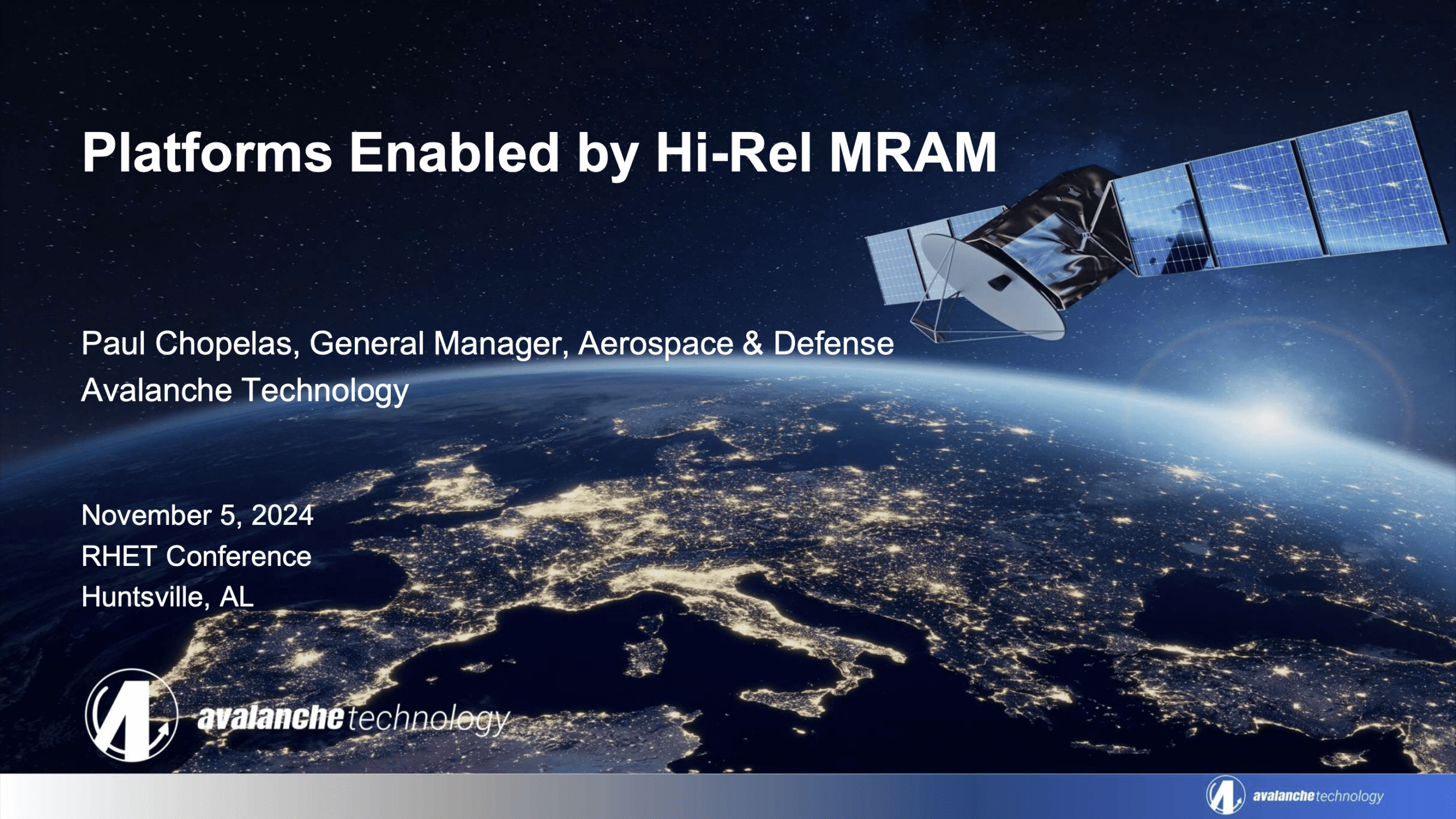
General Manager, Paul Chopelas, presented an updated roadmap at the RHET conference in Huntsville, AL last month, including several additions making waves: Space-targeted DDR4 solutions set to release mid-2025. In support of the industry’s increasing desire to eliminate radiation susceptible legacy memories, this first MRAM-based device set to replace DRAM (called Persistent DRAM), will be […]

2 New SEE MAPLD Presentations Now Available

Disposable COTS (Commercially-available Off The Shelf) microelectronics may appeal to some satellite projects. Yet 2 issues with COTS were called out at the recent SEE MAPLD conference: 1. It can take hundreds of hours of radiation testing and cycles of learning to tune each device to the rigors of space. 2. Demand is growing for […]

The Fluidity of Data in Space – Chapter 3: Data Buffers or Data Centers in Space: How are They Different and Why Does it Matter?

In recent months and years, there have been increasing calls to address challenges of satellite network scalability and resilience against threats, both natural and manmade. To better understand potential impact to satellite system and network architectures, we must first examine implications of the unique conditions and common use case requirements. While similarities exist with terrestrial […]

Avalanche Technology and Advanced Space Power Equipment GmbH Partner to Drive Satellite Power Supply Innovation

ASP is leveraging Avalanche’s Persistent-SRAM products to power the next wave of satellites Fremont, CA, May 30th, 2023 – Avalanche Technology, the leader in next generation MRAM technology, announced today that it is providing its disruptive Space Grade Persistent SRAM (P-SRAM) products for satellite power applications developed by Advanced Space Power Equipment GmbH (ASP). ASP […]

The Fluidity of Data in Space – Chapter 2: “Data Storage Needs Grow Astronomically in Orbit – Now what? You are going to use the power of the sun to Store the data?”

In recent months and years, there have been increasing calls to address challenges of satellite network scalability and resilience against threats, both natural and manmade. To better understand potential impact to satellite system and network architectures, we must first examine implications of the unique conditions and common use case requirements. While similarities exist with terrestrial […]

The Fluidity of Data in Space – Chapter 1: Is This “Star Trek” or the Envisioned Genesis of New Space?

In recent months and years, there have been increasing calls to address challenges of satellite network scalability and resilience against threats, both natural and manmade. To better understand potential impact to satellite system and network architectures, we must first examine implications of the unique conditions and common use case requirements. While similarities exist with terrestrial […]

Data Centers in Space – Stage 3: The Ultimate Data Center in Space

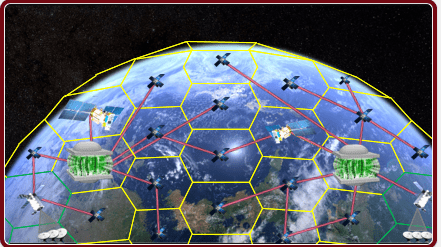
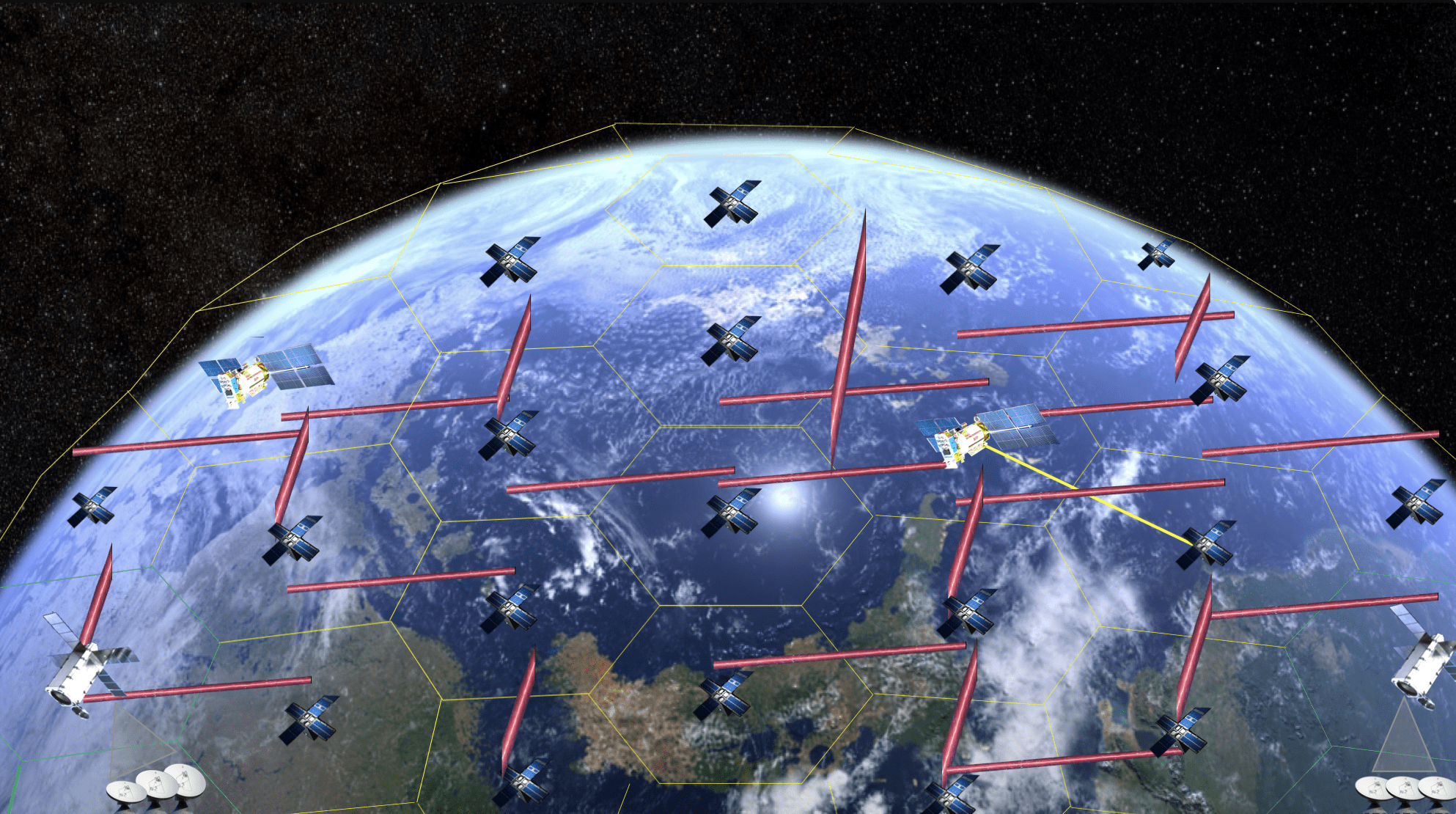
The deployment of mega-constellations and smallsats providing a sheer number of sensors in Low Earth Orbit “LEO” is driving the need for satellite data centers, to unleash the power of these emerging platforms. In a 3-part series, we will cover how Space systems are following in the footsteps of Terrestrial systems and will evolve to […]

Data Centers in Space – Stage 2: Security and Latency of Data in Space and in Transit

The deployment of mega-constellations and smallsats providing a sheer number of sensors in Low Earth Orbit “LEO” is driving the need for satellite data centers, to unleash the power of these emerging platforms. In a 3-part series, we will cover how Space systems are following in the footsteps of Terrestrial systems and will evolve to […]

Data Centers in Space – Stage 1: Space Data Collection

The deployment of mega-constellations and smallsats providing a sheer number of sensors in Low Earth Orbit “LEO” is driving the need for satellite data centers, to unleash the power of these emerging platforms. In a 3-part series, we will cover how Space systems are following in the footsteps of Terrestrial systems and will evolve to […]

Space Computing – Gen 3: The Future Intelligent Autonomous AI-enabled Space-IoT

The deployment of mega-constellations and smallsats in LEO is driving the democratization of space and changing how the data flows between the edge and the cloud. In a 3-part series, we will cover how space computing is following in the footsteps of Industrial IoT by enabling autonomous decision making at the edge of the compute […]

Space Computing – Gen 2: The Evolving Present

The deployment of mega-constellations and smallsats in LEO is driving the democratization of space and changing how the data flows between the edge and the cloud. In a 3-part series, we will cover how space computing is following in the footsteps of Industrial IoT by enabling autonomous decision making at the edge of the compute […]

Space Computing – Gen 1: The Recent Past

The deployment of mega-constellations and smallsats in LEO is driving the democratization of space and changing how the data flows between the edge and the cloud. In a 3-part series, we will cover how space computing is following in the footsteps of Industrial IoT by enabling autonomous decision making at the edge of the compute […]

Can I Connect a Battery to a RAM Device to Prevent Data Loss During a Power Outage?

SRAM or Static Random Access Memory is found in many electronic devices from alarm clocks and thermostats to hard drives. Specialized SRAM is used as cache memory in microcontrollers and microprocessors. Static, because its contents stay in whatever state they were programmed, indefinitely, but only if power is applied. SRAM is volatile memory, meaning that […]

Industrial Robots and MRAM

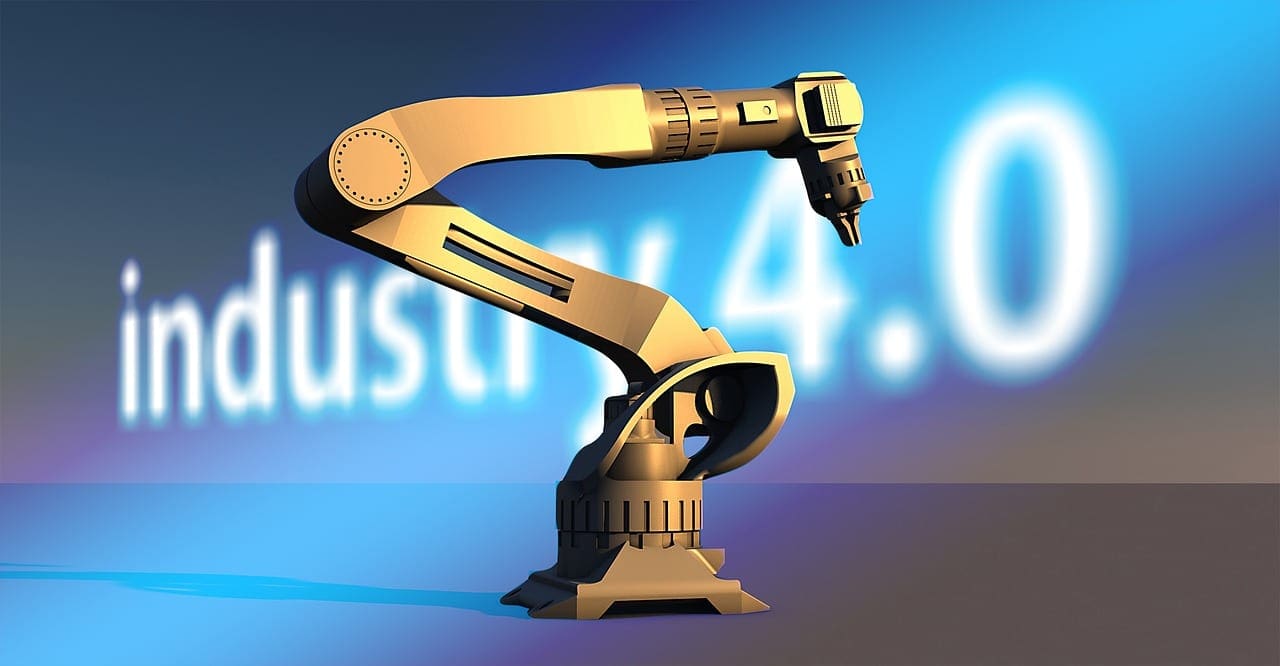
Industrial robots are programmable, electromechanical devices used in the place of a person to perform repetitive and sometime dangerous tasks. They are often automated and capable of movement around three or more axis. Industrial robots are commonly used in applications like welding, painting, ironing, assembly, pick and place, palletizing, product inspection, and testing, all accomplished […]

3 Key Things to know about STT-MRAM – #2 Can you have High-Reliability STT-MRAM?

MRAM is widely expected to combine the density of DRAM, the speed of SRAM and non-volatility and reliability of F-RAM (practically unlimited endurance and data retention) to yield a universal memory. Toggle MRAM (first generation MRAM) enabled non-volatile memory that featured practically unlimited endurance, long term data retention and speeds fast enough to be the […]

3 Key Things to know about STT-MRAM – #1 What is it?

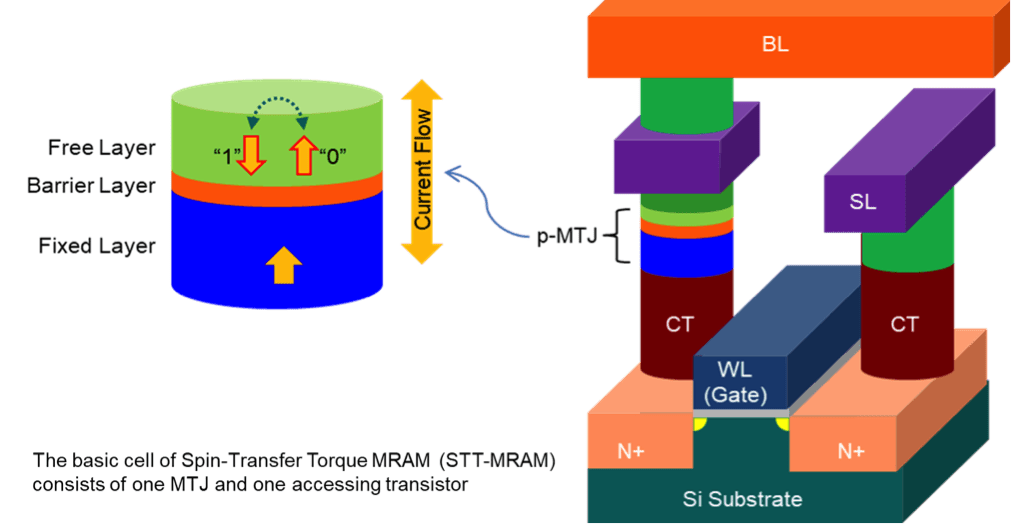
Spin Transfer Torque Magnetic Random Access Memory (STT-MRAM) is the latest design in the non-volatile magnetic RAM (MRAM) family. The information storage in STT-MRAM is a Magnetic Tunnel Junction (MTJ) instead of electric charges, which makes the difference between it and conventional RAM. Each MTJ contains two ferromagnetic layers and one tunnel barrier layer. Figure […]

Blast Off into Space with Avalanche Space Grade STT-MRAM’s SWaP Advantage

You might recall an earlier blog post – “MRAM’s Immunity to Radiation Makes It a Natural for Space”. In that post we talked about MRAM being superior to Flash, SRAM and DRAM in space. Exposure to charged particles affects memory technologies differently resulting in a Single Event Upset (SEU) or a Single Event Latch-up (SEL). […]

How We Built the Best Non-Volatile Memory for Industrial Automation and IIoT Applications Using STT-MRAM

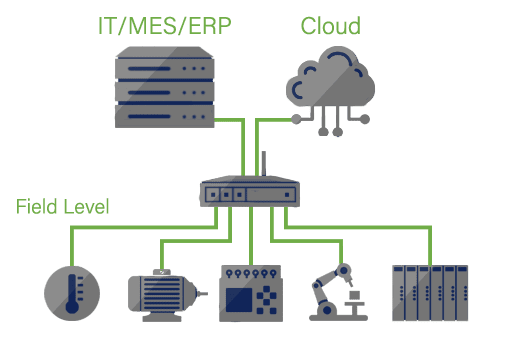
Industrial automation requires four major components – Programmable Logic Controllers (PLCs), Human Machine Interfaces (HMI Panels), Industrial Drives & Actuators, and Sensors. The PLC provides the compute function, HMI provides the Graphical User Interface (GUI), Industrial Drives & Actuators turn control signals into mechanical action, and finally the sensors monitor operating conditions, measurements etc. in […]

Industrial Internet of Things (IIoT) Gateways, Industry 4.0 and MRAM

Industrial automation requires four major components – Programmable Logic Controllers (PLCs), Human Machine Interfaces (HMI Panels), Industrial Dives & Actuators, and Sensors. The PLC provides the compute function, HMI provides the Graphical User Interface (GUI), Industrial Drives & Actuators turn control signals into mechanical action and finally the sensors monitor operation conditions, measurements etc. in […]

Reduce Maintenance Requirements and Improve System Reliability, Size and RoHS Compliance by Replacing Battery-Backed SRAM with P-SRAM

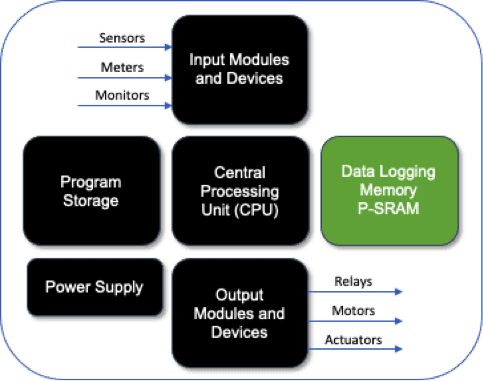
Industrial automation systems like PLCs scan the states of inputs such as proximity sensors, pressure sensors, temperature sensors, humidity sensors, switches, push buttons etc. and control outputs such as relays, valves, solenoids, actuators, motors, fans, alarms etc. These systems are usually real-time systems since the output states must be generated in response to the input […]

Maximize Battery Life in Health Wearables with Ultra Low Power MRAM

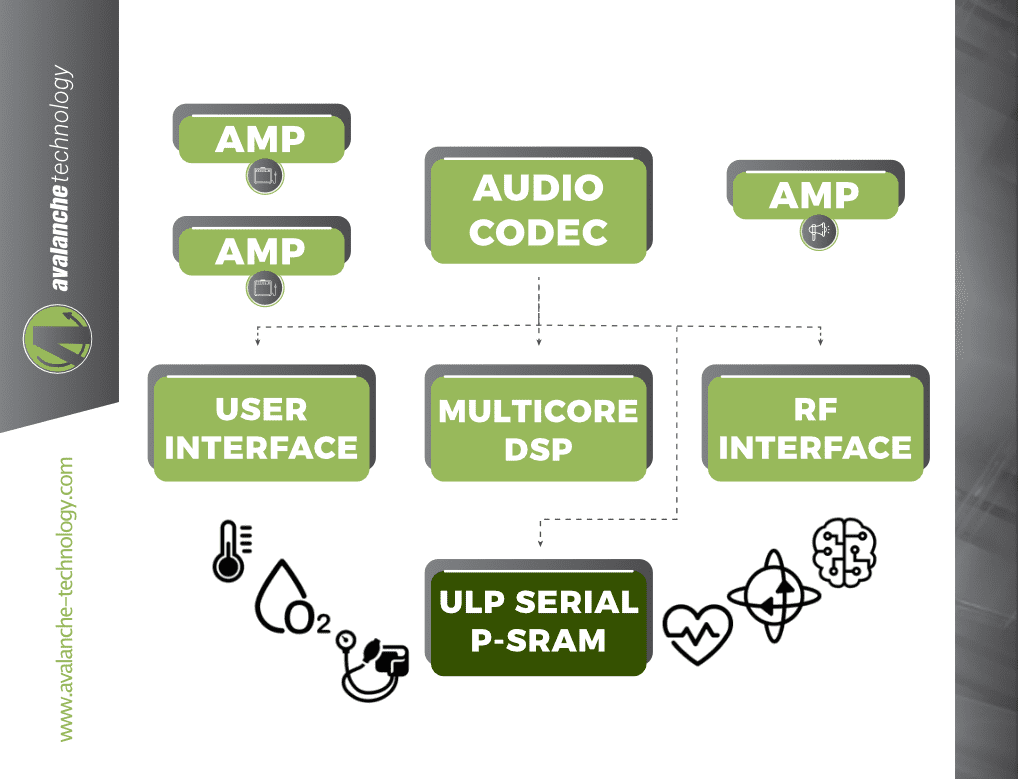
If you tuned in to the recent Apple Watch launch event, you might have got the impression that it is the biggest thing in health monitoring. Apparently 79% of the Apple Watch owners use it for health and fitness monitoring. Given the success of the Apple Watch, one would get the impression that it was […]

Increase Reliability While Reducing Cost and Complexity by Removing EDACs for Memories in Space Applications

Radiation Tolerant and Radiation Hardened FPGAs and Microcontrollers are often used in aerospace applications. More recently, owing to the increased resolution of available sensors, space applications must perform rapidly increasing amounts of on-board processing as sensor resolution is increasing faster than downlink bandwidth. FPGA vendors have raced to qualify FPGAs for these signal processing applications. […]

MRAM’s Immunity to Radiation Makes It a Natural for Space

Conventional types of memory such as SRAM, DRAM and Flash use Electric charge to store data. Magnetoresistive Random Access Memory (MRAM) is different from conventional types of memory. Instead of relying on the charge of electrons to store data, MRAM uses change in resistance due to magnetization. . This inherent difference in technology makes MRAM […]

Human Machine Interfaces and MRAM

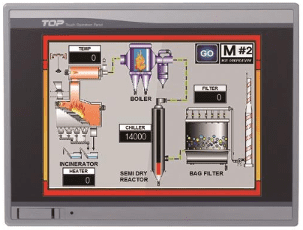
A human machine interface (HMI) is a text or graphical platform that permits interaction between operators/supervisors (users) and automation equipment. Industrial HMI is the primary tool that industrial operators and line supervisors rely on to control manufacturing or industrial processes. Industrial HMIs range from simple portable interfaces that replace push buttons and switches, to complex Supervisory Control and Data Acquisition (SCADA) operator panels. HMIs are sometimes also referred to as Man-Machine Interface or operator panels or control panels.

Edge Computing and MRAM-based Smart Sensors

Edge Computing has become the hot new term, particularly, in the context of the Internet of Things (IoT) – a system of interrelated computing devices, mechanical and digital machines that have the capability to transfer data over a network without requiring human-to-human or human-to-computer interaction. “Things” live at the edge of the network, where data is collected from various sensors. In the old computing model (cloud computing), this data was uploaded to a server in the cloud, and then analyzed and processed remotely. However, scalability issues, excessive power consumption, connectivity, and latency are driving the demand for edge processing of IoT data (it is the new computing model). By handling the heavy compute processes at the edge rather than the cloud, one can reduce latency, and can analyze and act on time-sensitive data in real-time. The other often-cited benefit of edge computing is the bandwidth or cost savings of sending data to the cloud. There is plenty of bandwidth available to send data to the cloud but costs can rapidly accrue when the data traverses the WAN/Service Provider network en route to the cloud data center.

MRAM: RAM Fit For All Your Mission-Critical Needs

The field of memory technology is profitable and growing, with revenues expected to reach $36 billion by 2030. As new types of RAM become available, it is worth comparing them to older options to determine which one is best. MRAM is one of the newest but most promising forms of RAM available. It is non-volatile […]

How AI and ML are Driving Memory Architecture Changes

Artificial intelligence and machine learning are fundamentally changing compute workloads in the cloud, the edge, and the IoT node. Memory architectures have changed to require persistence as a primary need over speed and low power. MRAM with its inherent persistence, low power and speed, is destined to become the next generation memory of choice all […]